Best BIFLCommercial-Grade Toasters
After analyzing 150+ sources including r/BuyItForLife, appliance repair forums, and 20+ year owner testimonials, here's the definitive guide to toasters that last decades - not years.
TL;DR: Quick Recommendations
Dualit Classic
~$300
The BIFL king - replaceable everything, lasts 30+ years
Breville Smart Toaster
~$180
Best features for the price, 10-15 year lifespan
Cuisinart CPT-180
~$80
Best durability under $100, 5-8 year lifespan
Waring Pro
~$200
Restaurant-grade durability for home use
Bottom line: For true BIFL, Dualit Classic ($300) - it's the only toaster with user-replaceable elements. For best features, Breville Smart Toaster ($180). For budget durability, Cuisinart CPT-180 ($80). For commercial-grade without premium price, Waring Pro ($200).
Why Most Toasters Fail Within 3 Years
The average toaster lifespan has dropped from 10+ years in the 1970s to just 2-3 years today. This isn't coincidence - it's designed obsolescence. Here's what fails and why.
Cheap Heating Elements
Budget toasters use thin nichrome wire that burns out after 2,000-3,000 cycles (2-3 years of daily use). These elements are integrated - when they fail, the entire toaster becomes e-waste.
Plastic Internals
To cut costs, manufacturers use plastic for lever mechanisms, timer gears, and internal supports. These components warp from repeated heat exposure, causing jamming, uneven toasting, and mechanism failure.
Electronic Controls
Digital timers and LED displays rely on cheap capacitors and circuit boards that fail within 5-7 years. The heat inside toasters accelerates electronic component degradation. Mechanical timers last decades.
Non-Replaceable Parts
Modern toasters are designed as sealed units. When any component fails, the entire appliance must be replaced. This generates profit for manufacturers but creates mountains of e-waste.
The True Cost of Cheap Toasters
A $30 toaster replaced every 3 years = $300 over 30 years, plus 10 appliances in landfills. A $300 Dualit with $100 in element replacements over 30 years = $400 total, one appliance. The "expensive" option is actually cheaper.
What Makes a Toaster BIFL?
BIFL toasters share four key attributes that separate them from disposable appliances. Understanding these helps you evaluate any toaster's longevity potential.
Replaceable Elements
The single most important BIFL feature. Dualit's ProHeat elements can be swapped by users in 10 minutes for $25-35. This alone extends lifespan from 5 years to 30+ years.
Metal Construction
Stainless steel or die-cast aluminum bodies handle thermal cycling without warping. Metal internal mechanisms resist heat degradation. Avoid any toaster with visible plastic beyond the crumb tray.
Commercial-Grade Elements
Look for quartz elements or thick nichrome rated for commercial use. Dualit's ProHeat and Waring's commercial elements are designed for 100+ daily cycles in restaurants. Home use is minimal stress.
Mechanical Controls
Mechanical timers use springs and gears that last decades. Electronic timers offer convenience but capacitors fail within 5-10 years. For true BIFL, choose mechanical controls.
Best BIFL Toasters by Price Tier
Budget (Under $100)
True BIFL at this price point is impossible - no budget toaster has replaceable elements. However, these models offer 2-3x the lifespan of $30 alternatives.

Cuisinart CPT-180
Brushed stainless steel housing
Standard nichrome wire
4-slice, 1.5" wide
6/10
Electronic with LED
3 years
5-8 years
No
The most durable sub-$100 toaster. Metal housing resists warping, motorized lift prevents mechanism wear, and 4-slice capacity means less use per slot. The electronic controls will eventually fail, but expect 5-8 solid years - 2-3x longer than $30 alternatives.
KitchenAid KMT4116
Die-cast metal housing
Dual independent elements
4-slice, 1.5" wide
5.5/10
Manual dial with LED
2 years
5-7 years
No
Solid construction with independent slot controls - toast 2 or 4 slices without wasting energy. Die-cast metal body handles heat well. Slightly shorter lifespan than Cuisinart due to more complex electronics, but better toast consistency.
Mid-Range ($100-200)
This tier offers the best balance of features and durability. Commercial-grade options begin appearing, with 10-15 year lifespans.
Breville Die-Cast 4-Slice BTA840
Die-cast aluminum, stainless steel
Quartz elements
4-slice, 1.5" wide
7.5/10
Electronic with LED countdown
2 years
10-15 years
No
The sweet spot of features and durability. Auto-lowering basket, "Lift and Look" to check progress, "A Bit More" button for extra toasting. Quartz elements provide faster, more even heat than nichrome wire. Die-cast construction handles thermal stress well.
"My Breville is going on 12 years. The auto-lower and countdown timer still work perfectly."
- r/BuyItForLife
Waring Pro WT400
Heavy-gauge stainless steel
Commercial-grade nichrome
4-slice, 1.4" wide
8.5/10
Mechanical timer, manual lever
5 years commercial
15-20 years
Serviceable by technician
Restaurant-grade durability for home use. Waring has made commercial food equipment since 1937. Heavy-gauge construction, no plastic internals, mechanical controls that never fail. Designed for 100+ cycles/day in diners - home use is a vacation.
Premium ($200+)
True BIFL territory. The Dualit Classic is the gold standard with its replaceable-everything philosophy. Other options trade some longevity for features.
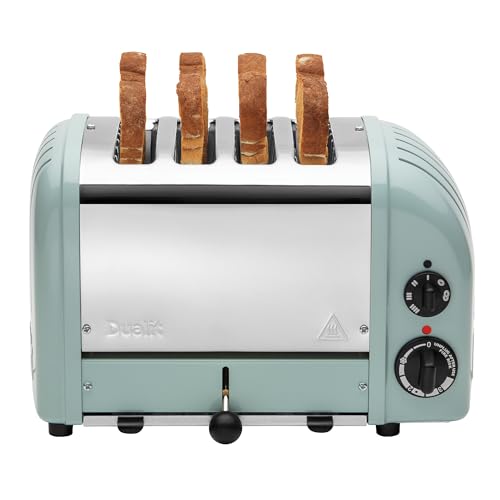
Dualit Classic 4-Slice
Hand-assembled aluminum, stainless steel
ProHeat replaceable elements
4-slice, 1.3" wide (sandwich cage compatible)
10/10
Mechanical timer, manual ejector
2 years (elements: lifetime availability)
30+ years
Yes - user replaceable ($25-35 each)
The only toaster designed to last forever. Hand-built in the UK since 1946. Every component is replaceable: ProHeat elements ($25-35, 10-minute swap), timer, thermostat, even the crumb tray. Mechanical controls have zero electronics to fail. Many Dualits from the 1970s are still in daily use.
"Inherited my grandmother's Dualit from 1982. Replaced the elements once. Still makes perfect toast every morning."
- r/BuyItForLife
Manual ejector means toast won't pop automatically. Intentional design for durability.
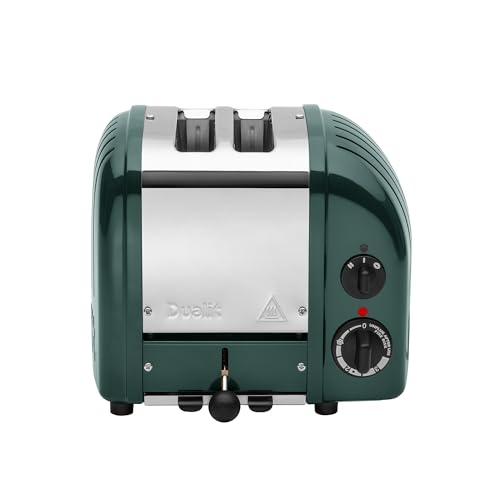
Dualit NewGen 4-Slice
Same as Classic + powder-coated colors
ProHeat replaceable elements + Peek & Pop
4-slice, 1.3" wide
10/10
Mechanical timer, selector switches
2 years (elements: lifetime availability)
30+ years
Yes - user replaceable ($25-35 each)
All the durability of the Classic with modern conveniences. Peek & Pop lets you check toast without stopping the cycle. Bagel and defrost settings. Available in 20+ colors including matte finishes. Same replaceable-everything philosophy.

SMEG 4-Slice Retro
Powder-coated steel
Fixed stainless steel
4-slice, 1.4" wide
6/10
Electronic with analog-style knob
2 years
7-10 years
No
Gorgeous 1950s aesthetic in 20+ colors. Makes a statement in any kitchen. However, the premium price is for design, not durability. Fixed elements, electronic controls, and reported uneven toasting issues. Buy for looks, not BIFL credentials.
Known issues with uneven toasting and stuck levers. Style over substance.
Dualit Deep-Dive: The BIFL King
Founded in 1946, Dualit has manufactured toasters in the UK for nearly 80 years. Their design philosophy is simple: everything should be repairable. This makes them unique in the modern appliance market.
Why Dualit Leads for BIFL
ProHeat Replaceable Elements
When elements wear out (every 10-15 years of daily use), order a $25-35 replacement from Dualit. Swap takes 10 minutes with a screwdriver. No electrician needed. Elements are available for toasters made 40+ years ago.
Mechanical Timer
No circuit boards, no capacitors, no LEDs. The mechanical timer uses simple clockwork that lasts indefinitely. If it ever fails, it's also user-replaceable. Zero electronics means zero electronic failures.
Manual Ejector Lever
The toast doesn't pop automatically - you lift it with a lever. This eliminates the pop-up spring mechanism, one of the most common failure points in other toasters. Simple design = nothing to break.
Hand-Built in the UK
Each Dualit is hand-assembled at their factory in West Sussex. Quality control is rigorous. Parts are made to exact specifications. This isn't mass production - it's craftsmanship.
The Dualit Investment
At $300 upfront, Dualit costs 3-4x a typical toaster. But consider: it's likely the last toaster you'll ever buy. Many owners report 25-40 years of daily use with just one or two element replacements. The cost-per-year drops to under $10 - less than any budget toaster.
Toaster vs Toaster Oven for Longevity
Dedicated Toaster (Dualit)
- + Fewer components to fail
- + Replaceable heating elements
- + Superior toast quality
- + Faster toasting
- - Limited to bread products
- - Can't reheat pizza, melt cheese
Lifespan: 30+ years (Dualit)
Toaster Oven (Breville Smart Oven)
- + Versatile (toast, bake, broil)
- + Can replace small oven
- + Better for open-faced sandwiches
- - More components to fail
- - Door hinges wear out
- - Electronic controls fail
Lifespan: 10-20 years (quality models)
The Verdict
For pure toasting longevity, a dedicated Dualit toaster wins. For versatility and still-good durability, the Breville Smart Oven Pro ($350) is the BIFL choice in toaster ovens. Many BIFL enthusiasts own both: Dualit for daily toast, Breville for everything else.
Maintenance Tips for Maximum Lifespan
Empty the Crumb Tray Weekly
Crumb buildup is a fire hazard and causes uneven heating. Most failures blamed on "broken elements" are actually crumb-related issues. Shake out the tray weekly and deep clean monthly.
Never Force Stuck Bread
If bread gets stuck, unplug the toaster and use wooden tongs. Metal utensils can damage elements and create electrical hazards. Forcing the lever can break the mechanism.
Keep Away from Water
Store the toaster away from the sink. Water in the slots or on electronics causes corrosion and shorts. Never try to clean with water while plugged in.
Use a Surge Protector
Power surges kill electronics. A quality surge protector extends the life of toasters with electronic controls. For mechanical toasters like Dualit, this is less critical but still good practice.
Replace Elements Proactively (Dualit)
If toast is taking longer or browning unevenly, the elements are wearing out. Order replacements before they fail completely. A $30 element every 10-15 years keeps a Dualit running indefinitely.
Frequently Asked Questions
Is a $300 Dualit really worth it over a $30 toaster?
For longevity, absolutely. A $30 toaster lasts 2-3 years on average (10 toasters over 30 years = $300). A Dualit with replaceable elements can last 30+ years with occasional $30 element replacements. The Dualit pays for itself within 10 years and continues saving money. Plus, you get superior toast quality from ProHeat elements.
Dualit vs Breville - which is more durable?
Dualit wins for pure longevity. Its mechanical timer and replaceable elements mean nothing electronic can fail. Breville Smart Toasters have superior features (auto-lowering, LED timer) but rely on circuit boards that typically last 10-15 years. For 20+ year ownership, Dualit. For 10-15 years with modern features, Breville.
Why do cheap toasters break so fast?
Three main reasons: (1) Thin nichrome wire heating elements that burn out in 2-3 years, (2) Plastic internal components that warp from heat exposure, (3) Electronic controls with cheap capacitors that fail. Quality toasters use thick quartz or ProHeat elements, metal internals, and mechanical controls that last decades.
Toaster vs toaster oven - which lasts longer?
A quality 2-slot toaster like Dualit typically outlasts toaster ovens. Toaster ovens have more components (door hinges, multiple elements, convection fans) that can fail. However, a commercial-grade toaster oven (Breville Smart Oven Pro) can last 15-20 years and offers more versatility. For pure toast longevity, stick with a dedicated toaster.
How long should a quality toaster last?
Budget toasters: 2-4 years. Mid-range toasters: 5-10 years. Premium toasters (Dualit, commercial): 20-30+ years with element replacements. The key differentiator is replaceable heating elements - without them, the toaster becomes e-waste when elements fail.
Can toaster heating elements be replaced?
On most consumer toasters, no - elements are integrated and replacement means buying a new toaster. Dualit is unique: ProHeat elements are designed for user replacement ($25-35 each, 10-minute swap). Some commercial toasters also offer replaceable elements. This single feature makes Dualit the BIFL king.
What is the best toaster for bagels?
For bagels, look for extra-wide slots (1.5"+ vs standard 1.1") and a bagel mode that toasts one side. Breville Die-Cast 4-Slice ($180) has 1.5" slots with dedicated bagel button. Dualit slots are 1.3" - adequate for most bagels. For thick NY bagels, the Breville Smart Toaster Pro with 1.6" slots is ideal.
Smeg toasters - style or substance?
Mostly style. Smeg toasters look gorgeous with their retro aesthetic and come in 20+ colors. However, they have fixed elements, electronic controls, and known issues with uneven toasting. For the $180-200 price, a Breville offers better performance and a Dualit offers better longevity. Buy Smeg for kitchen aesthetics, not BIFL durability.
Ready to Buy Your Last Toaster?
For true BIFL, the Dualit Classic ($300) is the only choice with replaceable everything. For best features with 10-15 year lifespan, Breville Smart Toaster ($180). For budget durability, Cuisinart CPT-180 ($80).